
"coffee growers"
11000 article(s) found

Kenyan Coffee Culture Kenyan Coffee Development
Coffee entered Kenya in the 19th century, when Ethiopian coffee drinks were imported into Kenya through southern Yemen. But it was not until the early 20th century that the Bourbon Coffee Tree was created by the St. Austen Mission (St). Austin Mission) is introduced. Kenyan coffee is mostly grown at an altitude of 1500 to 2100 meters and is harvested twice a year. To ensure that only ripe berries are picked, people must

Kenya Kam Chuk Valley Coffee Flavor Description Grind Scale Variety Region Taste Introduction
The flavor description of Kenya's Jinchu Valley coffee is based on the ground scale variety of the region. The taste introduction was introduced to Kenya in the 19th century, when Ethiopian coffee drinks were imported into Kenya via South Yemen. But it wasn't until the early 20th century that bourbon coffee trees were grown by St. Austin Mission introduced. Kenyan coffee is mostly grown at altitudes of 1,500 - 2,100 meters, a year.

Colombian Coffee Coffee Industry shut down due to domestic situation
Professional Coffee knowledge Exchange more information on coffee beans Please follow the coffee workshop (Wechat official account cafe_style) the situation in Colombia is volatile as protests against government-driven tax reforms continue. According to a report by Reuters on May 6, 2021, the head of the Colombian National Federation of Coffee growers confirmed that Colombia was protesting against the government.

Top 10 countries of origin of coffee beans in the world-boutique coffee
If growing coffee beans is an Olympic sport, it is definitely an arduous marathon. It is said to be a marathon not only because African countries have long been dominant in the project. If you want to become a big coffee producer, you must have strong economic strength, complete infrastructure and a lot of government investment. At the same time, you must also ensure that your land and nature

Introduction to the flavor of Kenyan coffee
Coffee entered Kenya in the 19th century, when Ethiopian coffee drinks were imported into Kenya through southern Yemen. But it was not until the early 20th century that the Bourbon Coffee Tree was created by the St. Austen Mission (St). Austin Mission) is introduced. Kenyan coffee is mostly grown at an altitude of 1500 to 2100 meters and is harvested twice a year. To ensure that only ripe berries are picked, people must

Introduction to the characteristics of Kenyan coffee beans in Berman Manor
Kenyan coffee is mostly grown at an altitude of 1500m, 2100m, and is harvested twice a year. To ensure that only ripe berries are picked, people must tour the forest about seven times. Kenyan coffee is grown by small farmers. After they harvest the coffee, they first send the fresh coffee beans to the cooperative cleaning station, where the washed and dried coffee is covered with parchment beans.

Kenya Coffee Estate Berman Estate Flavor Taste Features
On an international scale, the growth in Kenyan coffee production has been remarkable, with exports rising from 800,000 bags in 1969- 1970 to 2 million bags in 1985 - 1986. Production is now stable at 1.6 million bags, averaging about 650 kg per hectare. The average price of coffee in Kenya has been rising since before the recent spike. 1993--1994 The annual price is 12.

The course of Kenyan Coffee Culture Kenyan Coffee handling
Coffee entered Kenya in the 19th century, when Ethiopian coffee drinks were imported into Kenya through southern Yemen. But it was not until the early 20th century that the Bourbon Coffee Tree was created by the St. Austen Mission (St). Austin Mission) is introduced. Kenyan coffee is mostly grown at an altitude of 1500 to 2100 meters and is harvested twice a year. To ensure that only ripe berries are picked, people must

Coffee knowledge Coffee Origin Kenya
Rare good coffee-famous for its rich aroma and balanced acidity. People in the coffee industry all think that Kenyan coffee is one of its favorite products, because Kenyan coffee contains every feeling we want from a good cup of coffee. It has wonderful and satisfying aromas, well-balanced acidity, well-proportioned particles and excellent fruit flavors. Coffee

Leaf rust sweeps coffee plantations in Central America
According to a recent report released by the International Coffee Organization, the production of coffee crops in Central America has been reduced by about 15% in 2012 and 2013 due to leaf rust. As the overall economic growth in Central America slows, coffee growers in the region will suffer a double whammy of reduced production of coffee crops and a collapse in coffee prices, which will also hit the economies of Central American countries hard. As the coffee crop in Central America is in the international coffee market.
Coffee producing area-Kenya
Rare good coffee-famous for its rich aroma and balanced acidity.
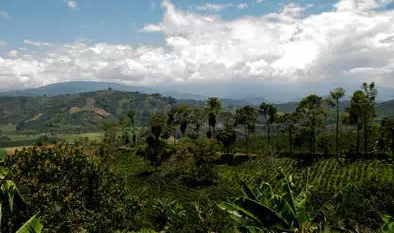
How does a coffee seed become delicious in a cup?
People in Seattle are curious. They want to know where their food comes from. We may know what kind of chicken we eat, or which farm our usual carrots come from, or which beach our oysters for dinner come from. Although Seattle people now prefer locally produced farm and livestock products, the same drink they need every day is another drink from the earth.

Boutique coffee beans knowledge coffee producing area Kenya
Coffee entered Kenya in the 19th century, when Ethiopian coffee drinks were imported into Kenya through southern Yemen. But it was not until the early 20th century that the Bourbon Coffee Tree was created by the St. Austen Mission (St). Austin Mission) is introduced. Kenyan coffee is mostly grown at an altitude of 1500 to 2100 meters and is harvested twice a year. To ensure that only ripe berries are picked, people must
Coffee beans are unsalable. Canon Pan has the right to price.
Price control has always been a prominent feature of coffee bean cultivation and production in Yunnan, but this situation is expected to change. By the end of 2015, Yunnan coffee prices will not have to refer to those in the New York futures market.

Introduction to variety treatment of grinding scale for flavor description of coffee beans in Jinchu Valley, Kenya
Kenya Jinchu Coffee Bean Flavor description Grinding scale Variety treatment was introduced to Kenya in the 19th century, when Ethiopian coffee drinks were imported to Kenya through South Yemen. But it was not until the early 20th century that the bourbon was introduced by the St. Austen Mission (St.AustinMission). Kenyan coffee is mostly grown at an altitude of 1500Murray 2100 meters above sea level and is harvested in a year.

Coffee producing area Kenya
People in the coffee industry all think that Kenyan coffee is one of its favorite products, because Kenyan coffee contains every feeling we want from a good cup of coffee. It has wonderful and satisfying aromas, well-balanced acidity, well-proportioned particles and excellent fruit flavors.

Kenyan Coffee Culture starts and ends the Development of Kenyan Coffee
Coffee entered Kenya in the 19th century, when Ethiopian coffee drinks were imported into Kenya through southern Yemen. But it was not until the early 20th century that the Bourbon Coffee Tree was created by the St. Austen Mission (St). Austin Mission) is introduced. Kenyan coffee is mostly grown at an altitude of 1500 to 2100 meters and is harvested twice a year. To ensure that only ripe berries are picked, people must
What are organic coffee beans?
In many parts of the world, growers use pesticides to control the growth of coffee pests, and moist and foggy coffee at high altitudes are more vulnerable to fungi, so growers often use pesticides to treat them. Many people believe that coffee can be called organic coffee as long as synthetic pesticides, herbicides and chemical fertilizers are not used during coffee growth. in fact, it is only in third parties (except coffee makers and producers).

What is organic coffee beans Organic Coffee organic coffee
In many parts of the world, growers use pesticides to control the growth of coffee pests, and moist and foggy coffee at high altitudes are more vulnerable to fungi, so growers often use pesticides to treat them. Many people believe that coffee can be called organic coffee as long as synthetic pesticides, herbicides and chemical fertilizers are not used during coffee growth. in fact, it is only in third parties (except coffee makers and producers).

Why is organic coffee more expensive than regular coffee?
Professional coffee knowledge exchange more coffee bean information Please follow Coffee Workshop (Wechat official account cafe_style) in many parts of the world, growers use pesticides to control the growth of coffee pests, and moist and foggy coffee at high elevations are often more vulnerable to pests, so growers often use insecticide treatments. Organic coffee is grown without any insecticides, and other